NUME
Move the symbols. Change the rules.
Turn mathematical symbols into objects and rules that a player can use to cross a spatial puzzle.
- 48
- levels in 6 chapters
- 307
- core tests
- 120
- app tests
- ≈ 2 MB
- app, almost no images
As of 2026-09-11, from the repository and releases
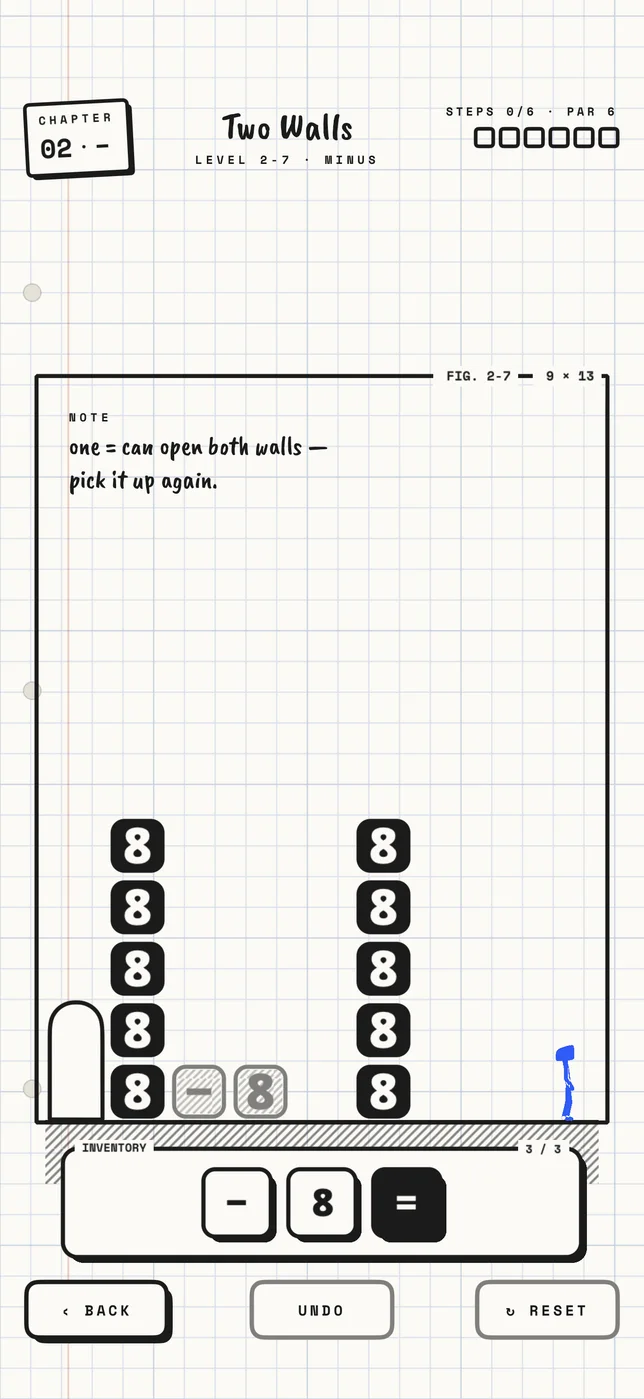
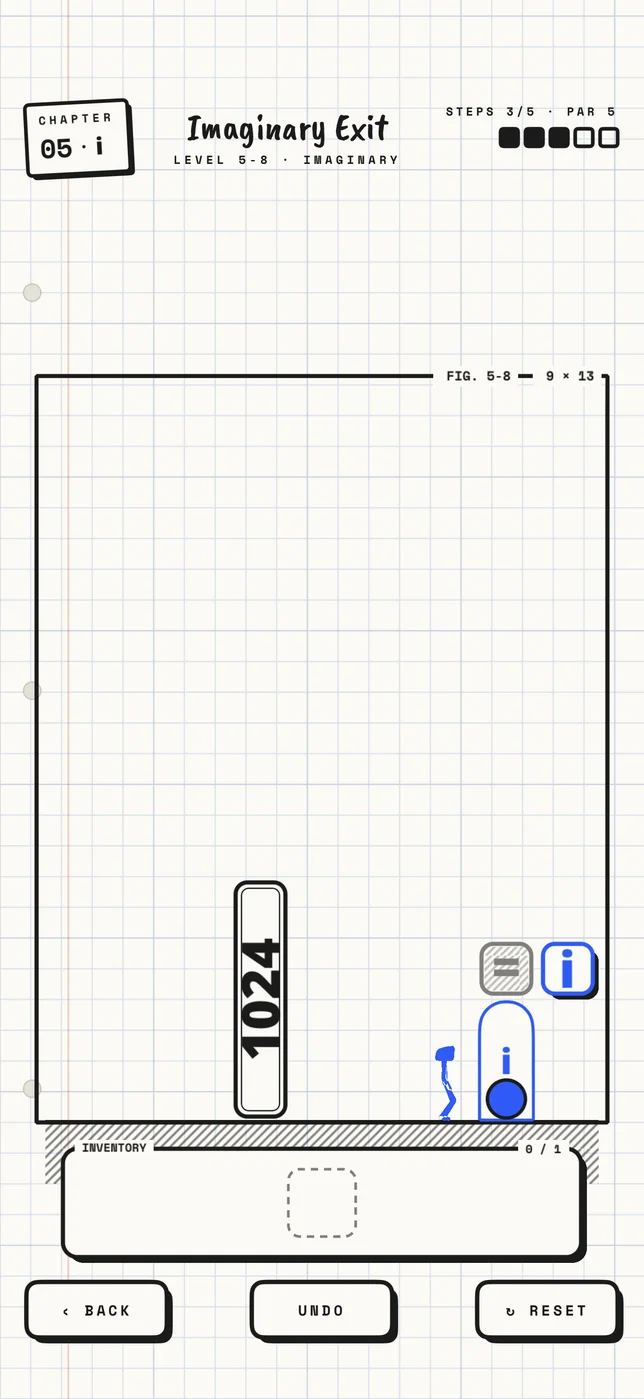
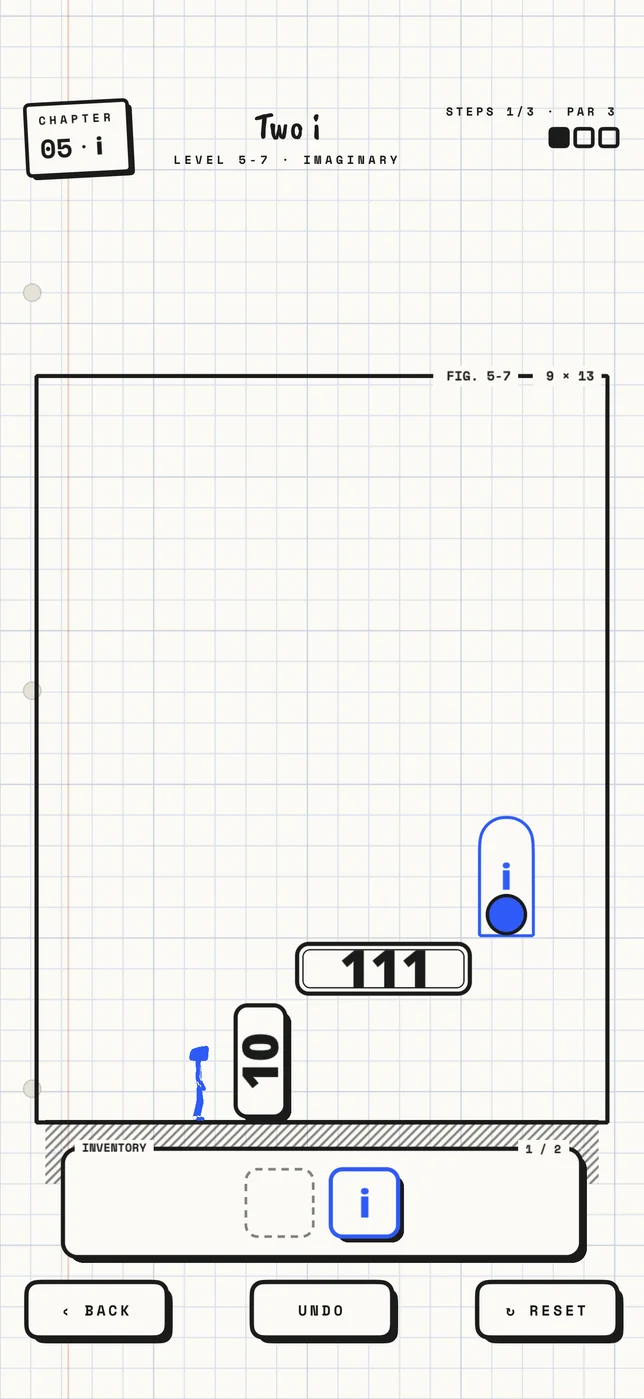
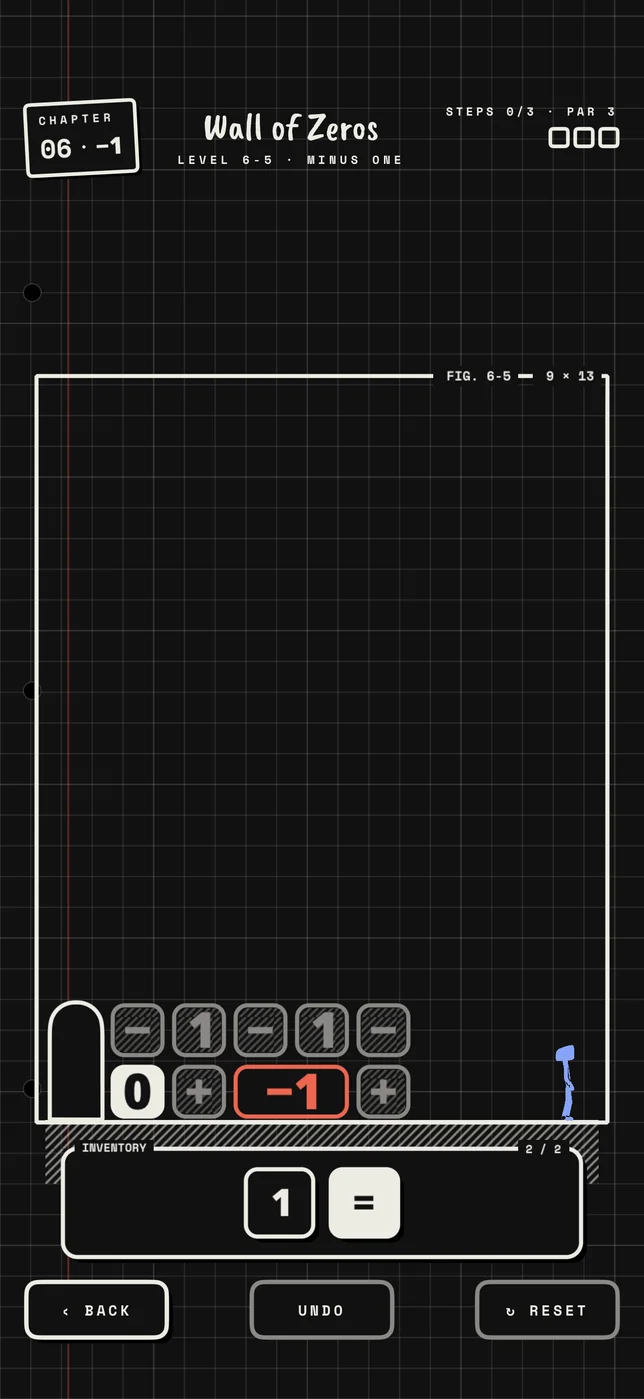
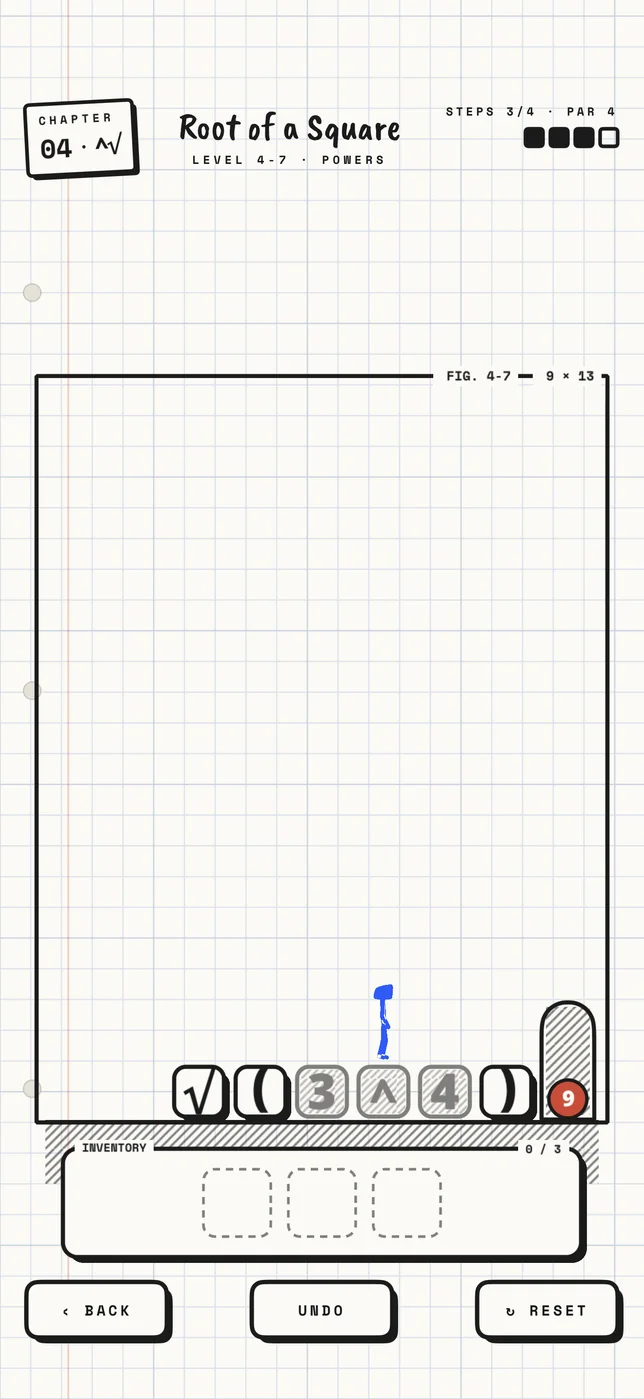
Captured from the development build
How it works
- 01
Choose a move
The player proposes a move in the grid world.
- 02
Apply the rules
The expression parser and world logic validate the move and calculate its effect.
- 03
See the consequence
The scene turns rule events into movement, feedback and character action.
- 04
Try & refine
The player retries; authoring tools replay solutions and search for selected shortcuts.
The hard parts, and what I did
Understand a rule by changing it.
Give mathematical symbols a place in the world, where moving them changes what the player can do.
Math that behaves like matter
- The problem
- The idea only works if every rule is simple, consistent and visible: a player should predict what an equation will do before pressing “=”.
- What I did
- Expressions evaluate at the “=” and drop the result to its right; a result of 0 makes a wall vanish; i turns a number 90° into a ladder. Each new rule gets a level that introduces it on its own.
- Result
- Every level declares which concepts it needs, and the build checks it.
Proving every level can be solved
- The problem
- A full-state search took 70 seconds on a level with six symbols — far too slow to check 48 levels on every build.
- What I did
- Replaced it with an arithmetic-reachability check plus a bounded placement search that also looks for unintended shortcuts.
- Result
- Runs as a release gate over all 48 levels; chapter 5’s par moves are proven true minimums by an exhaustive search.
Preparing for releasePlayable rule-driven prototype with replay and bounded level checks.
Stack
Swift · Swift PackageSpriteKit · SwiftUI shellExpression parser · RPNGrid world + pathfindingReplay scriptsBounded BFS solverProcedural character rig
Implementation details
A rule-driven puzzle prototype. Bounded search is not a global proof of solvability.
- Player action
- Act on a puzzle world with explicit rules.
- Game scene
- Translate world state into a playable visual scene.
- Rule core
- Apply actions to the authoritative world model.
- Expression parser
- Parse supported expressions and evaluate their order.
- Level checks
- Explore a limited state space for authored validation.
- Character motion
- Express the result through the character’s body and scene.